What Is Each-Way Betting in Greyhound Racing?
Best Greyhound Betting Sites – Bet on Greyhounds in 2026
Loading...
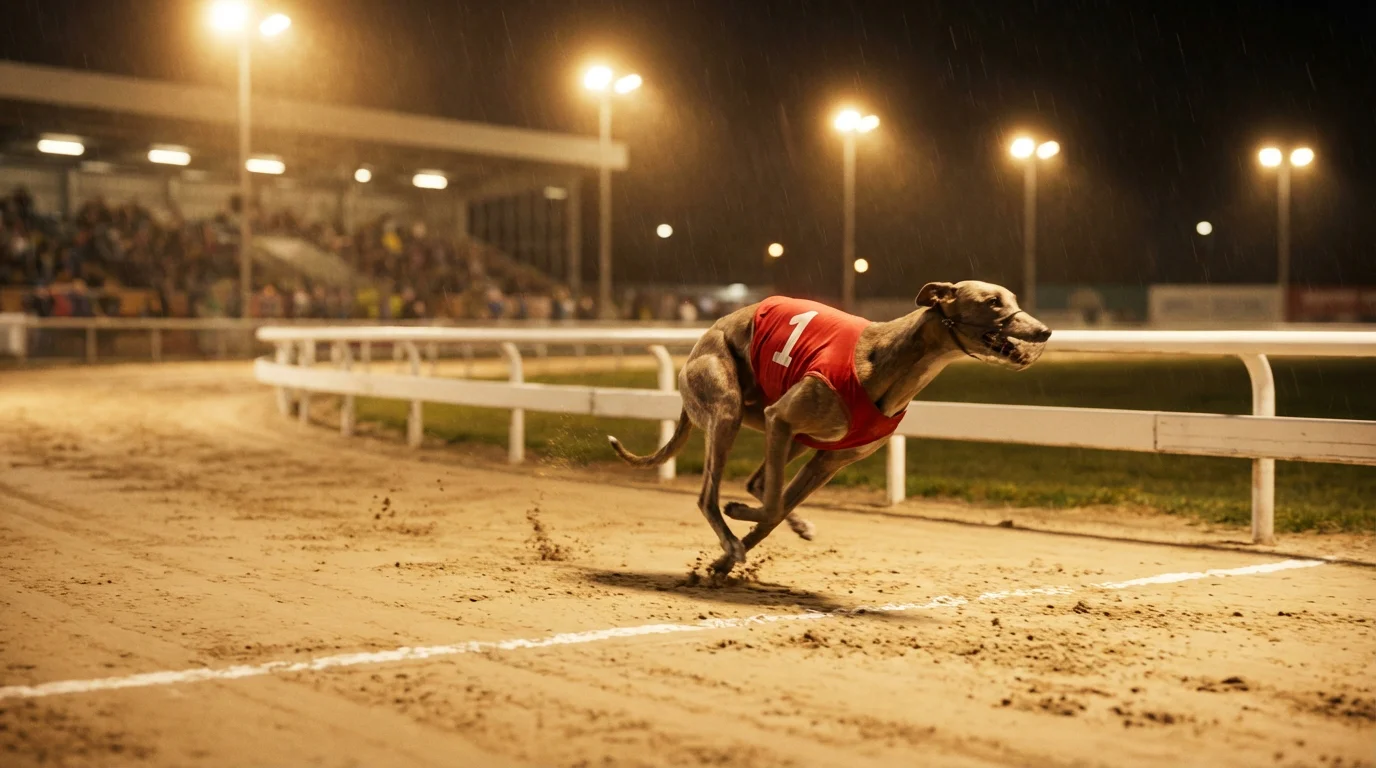
How Each-Way Works — Two Bets in One
An each-way bet is two separate bets sharing one decision. You pick a single greyhound, but your stake is split into a win bet and a place bet — two distinct wagers with different conditions for paying out. If your dog wins the race, both halves pay. If it finishes second but not first, only the place half returns money. If it finishes third or worse, both halves lose.
This structure means an each-way bet always costs double the unit stake. A “ten pounds each-way” bet isn’t ten pounds. It’s twenty — ten on the win, ten on the place. That’s the first thing new punters get wrong, and it changes the maths more than most people realise.
In UK greyhound racing, all standard races feature six runners. The place terms for a six-runner race are fixed: your dog needs to finish first or second for the place part to pay out. This is tighter than horse racing, where fields of sixteen or more runners often have three or four places available. With greyhounds, there’s no margin — top two only.
The place odds are calculated as a fraction of the win odds. For six-runner greyhound races, the standard fraction is one-quarter of the win odds. So if your dog is priced at 8/1 to win, the place part pays at 2/1 (one-quarter of 8/1). Your win bet still pays full odds if the dog wins, but the place leg pays the reduced fraction whether the dog finishes first or second.
This quarter-odds structure is universal across UK bookmakers for greyhound racing. It doesn’t change from track to track, bookmaker to bookmaker, or race to race. The consistency makes each-way greyhound betting straightforward to calculate, even if the implications of that calculation are not always straightforward to evaluate.
There is a crucial distinction between an each-way bet and simply placing a “place only” bet. With each-way, you’re locked into backing the win simultaneously. Some bookmakers do offer place-only markets for greyhounds, but they’re less common and the odds are often less generous than the implied place odds within an each-way wager. For most punters, each-way is the more practical route to getting a place interest on a dog.
One thing worth understanding early: each-way is not a safety net in any meaningful sense. It doesn’t halve your risk. You’re still committing full double-stake, and your place return at quarter-odds is often modest enough that it barely covers your total outlay. The scenarios where each-way produces real profit, rather than just softening a loss, are more specific than the general popularity of the bet would suggest.
Calculating Each-Way Returns
The maths isn’t complicated, but it’s easy to get wrong — especially when you’re doing it quickly at a track or trying to weigh up value before a price moves. Let’s work through the calculation at three different odds levels to see how the numbers shift.
At 3/1, a ten-pound each-way bet costs twenty pounds total. If the dog wins, the win half returns thirty pounds profit plus the ten-pound stake back. The place half pays at one-quarter of 3/1, which is 3/4 — that’s seven pounds fifty profit plus your ten-pound stake. Total return: fifty-seven pounds fifty. Total profit: thirty-seven pounds fifty. If the dog finishes second, you lose the ten-pound win bet but collect the place half: seven pounds fifty profit plus the ten-pound stake, totalling seventeen pounds fifty. Against a twenty-pound total outlay, you’ve lost two pounds fifty. That is the awkward truth of each-way at short prices — a place-only finish still loses you money.
At 5/1, the picture improves. Same ten-pound each-way, twenty-pound total cost. A win returns fifty pounds profit from the win half, plus twelve pounds fifty profit from the place half (one-quarter of 5/1 is 5/4), plus both stakes back — eighty-two pounds fifty total, sixty-two fifty profit. If the dog places second, the place leg returns twelve fifty profit plus the ten-pound stake, totalling twenty-two fifty. Against your twenty pounds outlay, you’re up two pounds fifty. This is roughly where each-way starts to break even on place-only finishes in six-runner races.
At 10/1, the each-way bet starts to earn its keep. A win returns one hundred pounds profit from the win half, twenty-five pounds from the place half (one-quarter of 10/1 is 5/2), plus both stakes — total one hundred and forty-five pounds, profit one hundred and twenty-five. A place-only finish returns twenty-five pounds profit plus the ten-pound stake — thirty-five pounds. Against your twenty-pound outlay, that’s fifteen pounds profit from a dog that didn’t even win.
The pattern is clear: below approximately 4/1, each-way on greyhounds is almost always a losing proposition when the dog only places. At 4/1 exactly, the place return at quarter-odds (evens) returns precisely the place stake — meaning a second-place finish costs you only the win portion. Above 5/1, a place finish starts generating genuine profit against the total outlay.
This breakeven zone is the single most important piece of maths in each-way greyhound betting. Plenty of punters back 2/1 shots each-way because they “want a safety net,” but the numbers show that a second-place finish at those odds still results in a net loss. The safety net has a hole in it.
When to Bet Each-Way — and When to Skip It
Each-way isn’t always smart — sometimes it’s just two bad bets. The decision to go each-way should be driven by the odds, the race conditions, and your genuine assessment of where the dog will finish. It should never be a reflex.
The strongest case for each-way is a dog at 5/1 or longer that you believe has a realistic chance of finishing in the top two but whose win probability doesn’t justify a large win-only stake. You’re essentially saying: “This dog is in the mix, but I’m not confident enough to load up on the win.” In that scenario, each-way gives you a meaningful return if the dog places and a very healthy return if it wins. The place leg is doing real work.
At shorter prices — anything below 4/1 — the case for each-way crumbles quickly. If a dog is 2/1 and you think it has a strong chance of winning, back it to win. The place return at quarter-odds of 2/1 (which is 1/2) barely covers the place stake. A second-place finish leaves you worse off than if you’d simply bet win-only for the same total outlay. You’re paying twenty pounds for the privilege of getting back fifteen if the dog runs second. That’s a five-pound insurance premium for very thin cover.
There’s also a class of race where each-way is particularly useful: competitive graded races where form is tightly bunched. If five of the six dogs have broadly similar recent times and the race looks open, identifying a dog with a slight edge — but in a field where anything could happen — makes the each-way structure more appealing. You don’t need to be right about the winner. You need to be right about one of the top two.
Where each-way makes less sense is in races with one dominant favourite. If the market has a dog at evens and the rest of the field at 5/1 or longer, the likely outcomes are either that the favourite wins or an outsider springs a surprise. A mid-price dog at 3/1 in that field is often neither good enough to win nor long enough to profit from the place return. You’d be better off either backing the favourite to win or taking a bigger-priced each-way shot on a genuine outsider.
Avoid the trap of going each-way on every bet as a habit. Punters who default to each-way regardless of odds are systematically overpaying for place insurance they don’t need. Each-way should be a deliberate tactical choice, not an emotional hedge.
Each-Way vs Win-Only: A Side-by-Side Comparison
Let’s put both bets next to each other and see who wins across a range of real scenarios. For a fair comparison, we’ll use the same total outlay — twenty pounds. That means either a twenty-pound win-only bet, or a ten-pound each-way bet (which also costs twenty pounds total).
| Odds | Outcome | Win-Only Return (£20 stake) | Each-Way Return (£10 E/W) |
|---|---|---|---|
| 2/1 | Wins | £60.00 (+£40.00) | £37.50 (+£17.50) |
| 2/1 | Places 2nd | £0.00 (-£20.00) | £15.00 (-£5.00) |
| 5/1 | Wins | £120.00 (+£100.00) | £82.50 (+£62.50) |
| 5/1 | Places 2nd | £0.00 (-£20.00) | £22.50 (+£2.50) |
| 10/1 | Wins | £220.00 (+£200.00) | £145.00 (+£125.00) |
| 10/1 | Places 2nd | £0.00 (-£20.00) | £35.00 (+£15.00) |
The table reveals the trade-off clearly. Each-way always returns less when the dog wins — significantly less. At 2/1, the win-only bet profits forty pounds while the each-way profits just seventeen fifty. That’s a fifty-six percent reduction in win profit for splitting your stake.
But look at the second-place column. At 2/1, each-way still loses money on a place-only finish, though far less than win-only. At 5/1, the each-way bet just edges into profit territory with a second-place finish. At 10/1, the place return is substantial enough to be genuinely worthwhile.
The question you need to answer is: how often do I expect this dog to finish first versus second? If you believe a 5/1 shot has a forty percent chance of finishing in the top two but only a twenty percent chance of winning outright, each-way might be the smarter bet. You’re accepting less profit when it wins in exchange for a meaningful return across a wider range of outcomes.
If you believe that same dog either wins or finishes nowhere — say it’s a front-runner that leads or fades — win-only is the sharper option. You concentrate your twenty-pound stake where the profit is highest and don’t dilute it across a place leg that’s unlikely to trigger.
There is no universally correct answer. The right bet depends on the dog, the race, the odds, and your honest assessment of how the race is likely to unfold. What’s universally wrong is going each-way without doing that assessment at all.
The Place Bet Advantage at Tracks with Tight Fields
At compact tracks like Kinsley, the place leg gains more weight. Here’s why. Kinsley’s circumference is 385 metres — smaller than most GBGB-licensed stadiums. Tighter bends, shorter straights, and a compressed field mean that race outcomes are harder to predict. The data backs this up: Kinsley recorded the lowest favourite win rate in UK graded racing in 2024, at roughly 31.6 percent. When favourites fail more often, the races are more open. And more open races are exactly where each-way betting finds its value.
Consider what a low favourite win rate actually implies for each-way punters. If the favourite wins only a third of the time at a given track, the other two-thirds of races are won by dogs at bigger prices. Those races tend to feature closer competition across the top two or three positions, which means second-place finishes are more evenly distributed across the field. A dog at 6/1 isn’t just more likely to spring a surprise win — it’s more likely to run into a place, too.
This effect is amplified at shorter distances. Kinsley’s 268-metre sprint is fast and chaotic. Six dogs compressed into a tight bend within seconds of the start creates genuine unpredictability, and in that kind of race the place portion of an each-way bet carries real insurance value. The dog you’ve backed might get checked on the first bend and lose the win but recover to grab second. At a wider track with longer runs to the first turn, that scenario is less common — the field spreads out earlier and positional change is harder to achieve late in the race.
None of this means each-way is always the right call at tight tracks. A well-seeded dog in a comfortable trap, with strong recent form and a clear running style advantage, should probably be backed to win regardless of venue. But in those races where the form looks clustered and no single dog screams “winner,” the place leg of an each-way bet at a track like Kinsley has more structural probability of paying out than the same bet at a larger, more predictable circuit.
The bottom line: each-way isn’t a blanket strategy and it isn’t a comfort bet. It’s a tool with a specific edge at specific odds and in specific race conditions. Use it where the maths supports it — roughly 5/1 and upward — and in races where the field is tight enough that finishing second is a credible outcome for your selection. At tracks with compact geometry and low favourite strike rates, that combination occurs more often than you might think. The punters who profit from each-way betting are the ones who understand where that edge lives and resist the temptation to apply it everywhere else.