GBGB Regulation: What It Means for Greyhound Racing and Betting
Best Greyhound Betting Sites – Bet on Greyhounds in 2026
Loading...
GBGB Role and Authority
The Greyhound Board of Great Britain — GBGB — is the governing body responsible for the regulation, licensing, and integrity of professional greyhound racing in the UK. Every licensed greyhound track, every registered trainer, and every racing greyhound competing at an official meeting operates under GBGB rules. If real greyhound racing in the UK has a central authority, this is it.
The GBGB was established in 2009 as the successor to the National Greyhound Racing Club, which had governed the sport since 1928. The transition modernised the regulatory framework, bringing it closer to the standards expected of a professional sport with significant public participation and commercial betting activity. The GBGB operates independently of the bookmaking industry and the gambling regulator (the UK Gambling Commission), though its work intersects with both.
The scope of the GBGB’s authority covers the full lifecycle of competitive greyhound racing. It licenses tracks, registers trainers and racing staff, maintains the stud book and pedigree records, sets the rules of racing, administers the grading system framework, oversees welfare standards, conducts anti-doping testing, and investigates integrity concerns. It also manages the sport’s disciplinary system — hearing cases against trainers, owners, or track officials who breach the rules and imposing sanctions that range from fines to suspensions to lifetime bans.
For bettors, the GBGB’s existence provides a layer of assurance that the racing product they’re wagering on is regulated, tested, and subject to independent oversight. A race at a GBGB-licensed track has been organised under published rules, with dogs that have been registered, graded, and tested, and with officials present to enforce those rules. This isn’t a guarantee of a perfect product, but it distinguishes licensed racing from unlicensed or unregulated alternatives — sometimes called “flapping” tracks — where none of these protections apply.
Track Licensing
Not every greyhound track in the UK is GBGB-licensed. The distinction between licensed and unlicensed venues is fundamental to the integrity of the sport and the reliability of the betting product.
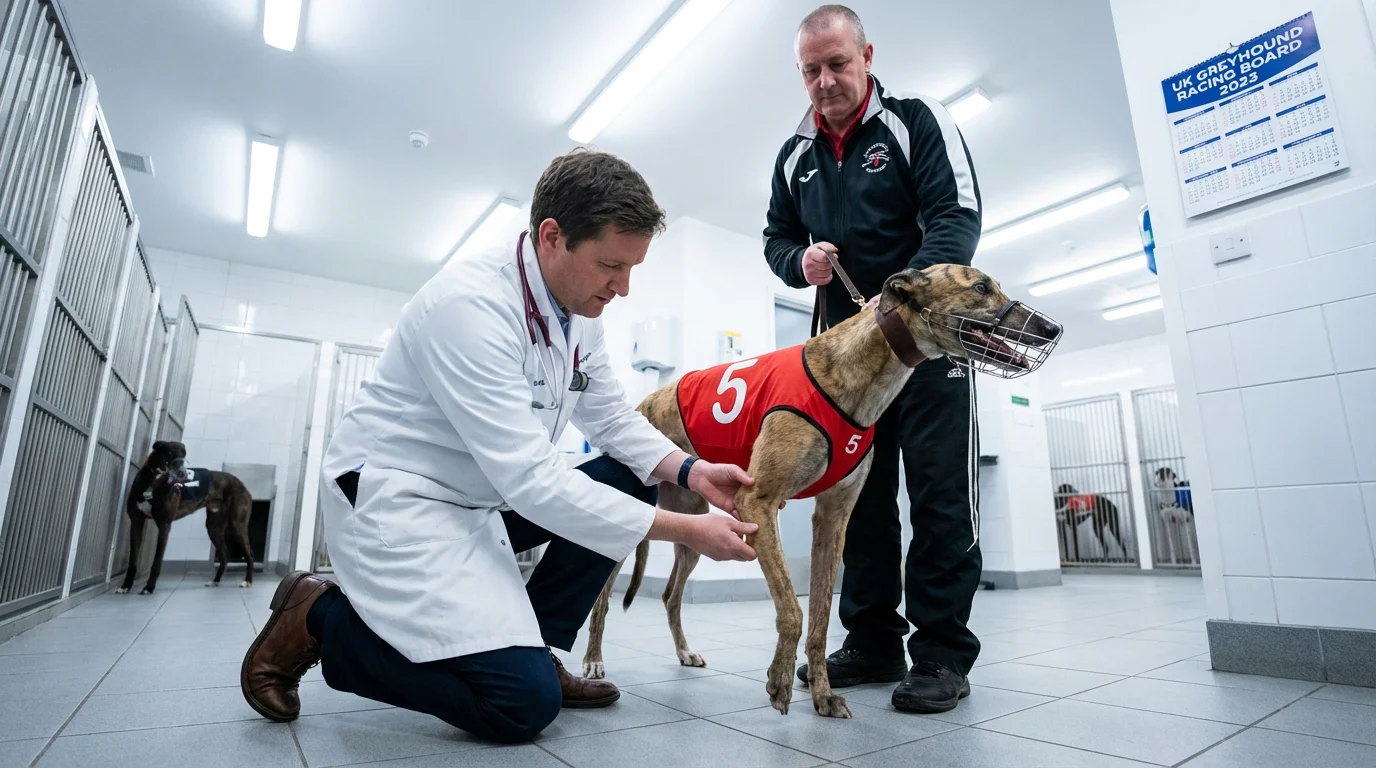
A GBGB-licensed track has undergone inspection and approval, demonstrating that its facilities, safety standards, track surface, veterinary provision, and operational procedures meet the governing body’s requirements. Licensed tracks employ GBGB-trained racing officials — stipendiary stewards who attend every meeting, a racing manager who oversees grading and entries, and veterinary staff who examine every dog before and after racing. The licence is not permanent; it requires ongoing compliance, and tracks are subject to periodic reviews and inspections.
The number of GBGB-licensed tracks in the UK has declined over the decades, reflecting the sport’s contraction from its mid-twentieth-century peak. Where once there were dozens of licensed stadiums across the country, the current roster is considerably smaller. Each closure reduces the competitive landscape and concentrates racing into fewer venues. Kinsley, as a GBGB-licensed track in West Yorkshire, is part of this surviving network — a venue that meets regulatory standards and contributes to the national racing calendar.
Unlicensed tracks — “flapper” tracks — operate outside the GBGB framework. They may hold greyhound racing events, but without the regulatory apparatus: no standardised grading, no registered trainers, no doping controls, no independent stewarding. Betting on flapper meetings is available at some venues, but the product carries none of the integrity guarantees that licensed racing provides. For serious bettors, unlicensed racing is a different proposition entirely — one where the absence of regulation creates risks that no amount of form analysis can mitigate. The grading might be inconsistent, the dogs might not be who the racecard says they are, and there’s no governing body investigating if something looks wrong.
The distinction between licensed and unlicensed racing has financial implications too. Major UK bookmakers exclusively feature GBGB-licensed meetings in their greyhound sections. The odds, racecards, live streams, and results you see on Bet365, William Hill, Coral, or any other licensed operator are drawn from GBGB-regulated events. If you’re betting through a licensed bookmaker on a meeting listed in their greyhound section, you’re betting on a regulated product. That alignment between the racing regulator and the betting regulator provides a consistent standard across the industry. Unlicensed meetings may still offer on-course betting, but they’re invisible to the mainstream online betting market — and for good reason.
Integrity Measures
Integrity — the assurance that races are conducted fairly and that results reflect genuine competition — is the foundation on which greyhound betting depends. Without it, odds are meaningless, form is unreliable, and the betting product collapses. The GBGB operates a structured integrity programme designed to detect, deter, and punish any attempt to corrupt race outcomes.
Stipendiary stewards attend every GBGB-licensed meeting. Their role is to oversee the conduct of racing, ensure compliance with the rules, and investigate any incident during a race — interference, early release from traps, irregular running — that might indicate a problem. Stewards have the authority to hold enquiries immediately after a race, interview trainers, and amend the result if the rules have been breached. Their presence at every meeting is the first line of defence against irregularity.
The GBGB also monitors betting markets for unusual patterns. Significant, unexplained market movements — a dog shortening dramatically without obvious form justification, or an expected favourite drifting without explanation — can trigger an investigation. The governing body works with bookmakers and betting data providers to access market information, and suspicious patterns are cross-referenced with race footage, kennel records, and trainer activity.
Information from the public is part of the system too. The GBGB operates a confidential reporting service where anyone — punters, kennel staff, track employees — can report concerns about integrity without identifying themselves. These reports are investigated by the GBGB’s integrity team, and credible allegations lead to formal enquiries.
Sanctions for integrity breaches are severe. Trainers found to have interfered with a dog’s performance — whether through prohibited substances, deliberate underperformance, or manipulation of the grading system — face suspensions, fines, and removal of their licence. In serious cases, individuals can be warned off — permanently excluded from all GBGB-licensed premises and activities. The severity of the sanctions reflects the seriousness with which the governing body treats integrity threats, and the public nature of disciplinary outcomes (published on the GBGB website) serves as a deterrent.
Doping Controls
Anti-doping testing is one of the most visible and important elements of the GBGB’s regulatory programme. Every meeting at a GBGB-licensed track includes routine sampling of runners, and the results of those samples are analysed at an accredited laboratory to detect prohibited substances.
The testing process works as follows. After selected races — the GBGB doesn’t test every dog at every meeting, but the sampling is designed to be unpredictable and comprehensive over time — urine samples are collected from designated runners under supervised conditions. The samples are sent to the GBGB’s contracted laboratory, which tests for a broad spectrum of prohibited substances including performance-enhancing drugs, sedatives, stimulants, anti-inflammatory agents, and masking compounds. The list of prohibited substances is extensive and regularly updated to reflect new threats.
A positive test triggers a formal investigation. The trainer, as the person legally responsible for the dog’s condition, is notified and given the opportunity to respond. The process includes a B-sample analysis (a second test on the retained portion of the original sample) to confirm the finding, and the trainer may present a defence before a disciplinary panel. If the positive finding is upheld, the sanctions follow: disqualification of the dog’s result, a fine for the trainer, and a suspension from racing that can range from months to years depending on the substance and the circumstances.
The anti-doping programme serves two purposes. The primary one is deterrence: trainers know their dogs can be tested at any meeting, and the consequences of a positive test are career-damaging. The secondary purpose is detection: catching instances where prohibited substances have been administered, whether deliberately to affect performance or inadvertently through contaminated feed or medication residues. The programme isn’t infallible — no testing regime catches everything — but it provides a meaningful level of assurance that the dogs competing at GBGB meetings are doing so without pharmacological assistance.
For bettors, the anti-doping programme means that the form record of a dog at a GBGB-licensed meeting reflects genuine, unassisted performance with a high degree of reliability. When a dog runs 28.50 seconds over 462 metres at Kinsley, you can have reasonable confidence that the time was achieved cleanly. This confidence underpins every aspect of form analysis — without it, historical times and finishing positions would be meaningless as predictive tools.
What Regulation Means for Punters
For the average punter placing bets on greyhound racing through a UK bookmaker, the GBGB’s regulatory framework operates in the background — invisible but essential. You don’t interact with the GBGB directly, and you don’t need to understand every rule in its handbook. But the regulation shapes the product you’re betting on in ways that directly affect the quality and reliability of your betting experience.
First, regulation means standardised competition. The grading system, the trap allocation process, the distance classifications, and the race conditions are all set within a GBGB framework. This standardisation is what makes form analysis possible. You can compare a dog’s A4 result at Kinsley last week with its A4 result three weeks before because the grade label means the same thing at the same track across time. Without standardised regulation, each meeting would operate by its own rules, and form data would be incomparable.
Second, regulation means tested competitors. The anti-doping programme ensures that the dogs’ performances are clean. The veterinary checks before and after racing ensure that dogs are physically fit to compete. The trainer registration system means the people responsible for the dogs have been vetted and are accountable to the governing body. These layers of testing and accountability are what distinguish a regulated sporting product from an uncontrolled spectacle.
Third, regulation means recourse. If something goes wrong at a meeting — a procedural error, an irregularity in the running of a race, a disputed result — the GBGB’s disciplinary and appeals process provides a mechanism for investigation and resolution. Punters can’t appeal directly to the GBGB over a lost bet, but the existence of a regulatory body that investigates and punishes wrongdoing provides systemic protection for the integrity of the betting product. Published disciplinary outcomes on the GBGB website also give bettors a window into the system’s active enforcement — you can see that rules are being applied, not just written.
Fourth, regulation means welfare accountability. The GBGB sets and enforces welfare standards for racing greyhounds, covering housing, feeding, veterinary care, injury management, and retirement. Trainers who fail to meet welfare standards face sanctions. Tracks that don’t provide adequate veterinary facilities risk losing their licence. For many punters, knowing that the dogs they’re watching race are cared for within a regulated welfare framework matters — it’s part of the social licence that allows the sport and its associated betting activity to continue.
The practical implication is simple: bet on GBGB-licensed meetings, through UKGC-licensed bookmakers. This combination — regulated racing product, regulated betting operator — gives you the highest available level of integrity assurance. It doesn’t guarantee you’ll win, and it doesn’t eliminate all risk. But it ensures you’re betting on a product where the rules are published, the competitors are tested, the officials are present, and the governing body is watching. In any betting activity, that’s the minimum standard you should accept.