Greyhound Racing Schedule UK: How Meetings Are Organised
Best Greyhound Betting Sites – Bet on Greyhounds in 2026
Loading...
Daily Schedule Structure
UK greyhound racing runs every day of the week, with meetings spread across GBGB-licensed tracks from morning through to late evening. The daily schedule is denser than many casual punters realise — on a typical day, there are multiple meetings running simultaneously at different venues, each offering a full card of races. The total number of individual greyhound races in the UK on any given day routinely exceeds one hundred.
A standard meeting comprises ten to fourteen races, run at intervals of approximately twelve to fifteen minutes. The first race on a card has a scheduled off time, and subsequent races follow at the published intervals, with slight delays if a race requires a stewards’ enquiry or if there are operational hold-ups at the traps. A twelve-race evening meeting typically runs for about three hours from first to last race.
The races on a card are organised by the track’s racing manager to cover a mix of distances and grades. A typical evening card at a track like Kinsley might include sprint races over 268 metres, standard middle-distance races over 462 metres, staying races over 650 metres, and occasionally a marathon over 844 metres. The grade range spans from the top-graded dogs at the venue down to the lower tiers, ensuring that every dog in the track’s racing pool has competitive races available.
The racecard — the full programme of races for a meeting — is published in advance, usually by midday on the day of the meeting for evening cards. Bookmakers display the racecard on their greyhound sections as soon as it’s available, and data providers like Sporting Life and Timeform publish them with form analysis. The advance publication gives bettors time to study the card, assess the form, and make their selections before the first race.
Between race days, tracks are used for trial sessions — timed runs that the racing manager uses to assess dogs for grading and entry into competitive races. Trials are not open to public betting, but the trial times are recorded and available through some data platforms, providing additional form information for bettors who look beyond the headline racecard data.
Morning, Afternoon and Evening Meetings
Greyhound meetings in the UK are categorised by their start time, and the different slots serve different purposes within the racing calendar and the betting ecosystem.
Morning meetings — sometimes called “BAGS meetings” after the Bookmakers’ Afternoon Greyhound Service that historically sponsored daytime racing — typically start between 10:00 and 11:00 and run through the late morning. These meetings were originally created to provide betting content for high-street bookmaker shops during the morning hours when horse racing hadn’t yet started. They continue to serve that function, and the betting turnover on morning greyhound meetings is primarily driven by shop activity and online bettors looking for early-day action.
Afternoon meetings occupy the midday-to-early-evening slot, with first races typically between 13:00 and 15:00. These overlap with the afternoon horse racing programme and compete for betting attention. Afternoon greyhound meetings draw a mix of shop and online betting, and the cards are usually full-sized with competitive fields across multiple distances and grades.
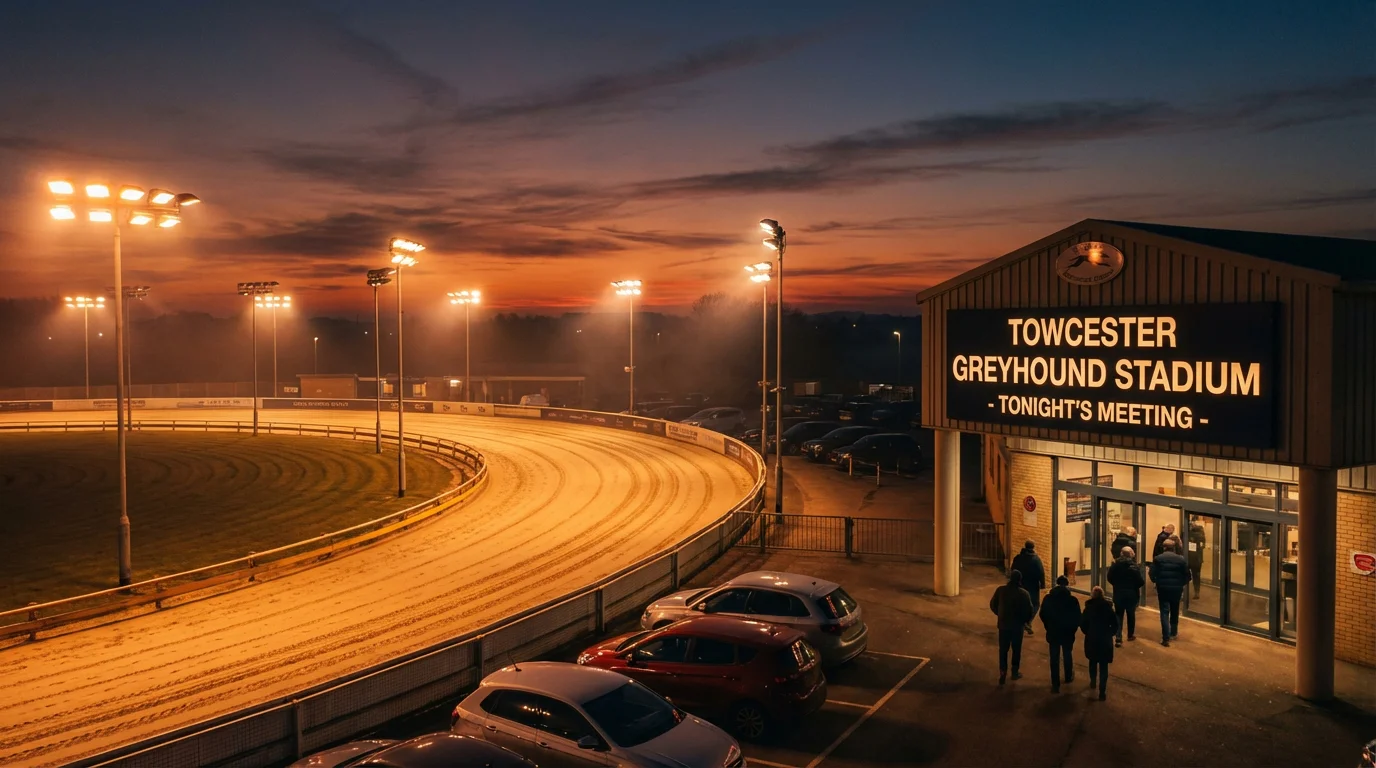
Evening meetings are the traditional heartland of greyhound racing. Starting between 18:00 and 19:30, evening cards are the flagship events for most tracks — the meetings with the best dogs, the biggest crowds (for tracks that still draw significant attendance), and the highest betting turnover. Evening racing at a track like Kinsley is the main event: the card features the strongest graded fields, the open races, and the feature events that define the venue’s competitive identity.
The distinction between time slots matters for bettors in a practical sense. Morning and afternoon meetings can feature slightly weaker fields than evening cards, because trainers sometimes save their best dogs for the evening. The betting markets for daytime meetings are also thinner — less money is wagered, the odds are set from fewer data points, and the prices can be more volatile. For punters who are comfortable with thinner markets and willing to do the form work, daytime greyhound meetings can offer value opportunities that the more heavily-traded evening markets don’t.
Weekend schedules are broadly similar to weekdays, though Saturday and Sunday often feature additional meetings and occasionally higher-profile events. Bank holiday Mondays and festive periods sometimes include enhanced cards with bigger prize funds and special races.
Broadcasting: SIS, ARC and Coverage Networks
The broadcasting infrastructure behind UK greyhound racing determines which meetings you can watch, which bookmakers show them, and how the betting data flows from the track to your screen.
SIS — Satellite Information Services — is the dominant provider of live data and video for UK greyhound racing. SIS supplies the live feeds that power most bookmaker streams, betting shop screens, and online platforms. When you watch a greyhound race on a bookmaker’s website or app, the video is almost certainly coming through the SIS network. SIS covers the majority of GBGB-licensed meetings, and their coverage includes pre-race data, live race footage, and results.
ARC — Arena Racing Company — is the other major player, operating as both a racecourse and greyhound stadium operator and a media rights holder. ARC owns and operates several greyhound stadiums and controls the media rights for meetings at its venues. ARC-branded greyhound content is distributed through its own channels and through agreements with bookmakers. If you’re betting on a meeting at an ARC-operated track, the video feed and data come through the ARC network.
The practical difference for bettors is that not every bookmaker carries every meeting. The majority of GBGB meetings are available across all major operators, but some meetings — particularly those at ARC venues — may be available only through specific bookmakers that have the relevant broadcasting agreement. If you want to watch a specific meeting live and it’s not showing on your primary bookmaker’s stream, check whether it’s available through another operator. Having accounts with two or three bookmakers ensures you can access almost every live meeting in the UK schedule.
Sky Sports Racing provides dedicated television coverage of greyhound racing alongside its horse racing programming. Sky’s greyhound coverage includes selected evening meetings with studio-based presentation, expert commentary, and pre-race analysis. The production quality is higher than the standard SIS feed, and the analysis adds value for bettors who appreciate informed commentary. Access requires a Sky subscription or a streaming pass from one of Sky’s partner platforms.
For punters who bet without watching, the data feeds are more important than the video. Race results are published within seconds of each race finishing, and the updated form, times, and running comments are typically available on data platforms within minutes. Real-time results tracking is possible through bookmaker sites, Sporting Life, Timeform, and dedicated greyhound results pages.
Seasonal Calendar and Key Periods
UK greyhound racing runs year-round with no off-season, but the competitive calendar has distinct seasonal rhythms that affect the quality of racing, the volume of meetings, and the betting landscape.
The spring and summer months — roughly April through September — represent the peak period for greyhound racing. Track conditions are at their fastest (dry, firm sand), the dogs are generally at their physical peak for the season, and the major national competitions are scheduled during this window. The English Greyhound Derby, the sport’s most prestigious event, is traditionally held in the summer. The St Leger, the Puppy Derby, and other high-profile competitions also fall within the spring-to-autumn racing calendar. Ante-post betting on these events opens weeks before the first heats, creating a parallel betting market alongside the regular daily cards.
The autumn transition — October and November — brings changing track conditions as temperatures drop and rainfall increases. Times typically slow as the surface becomes heavier, and the form profiles of dogs can shift. Autumn is often when trainers begin to adjust their kennel strategies, resting dogs that have had a long summer campaign and bringing in fresh competitors. For bettors, the autumn transition requires recalibration: summer form doesn’t automatically carry into the wetter, slower conditions of late autumn.
Winter racing — December through March — is the quietest period competitively, though meetings continue daily. The cold, wet conditions produce the slowest times of the year, and some tracks experience cancellations due to frost, waterlogging, or extreme weather. The number of scheduled meetings may reduce slightly during the coldest weeks, and prize funds at routine meetings tend to be lower than in the summer peak. However, winter racing has its own appeal for dedicated bettors: the fields are still competitive, the form book continues to generate data, and the thinner betting markets can offer value opportunities that are harder to find during the heavily-traded summer months.
The Christmas and New Year period brings a spike in casual betting interest. Bookmakers promote greyhound racing as part of their festive betting offering, and meeting cards during the holiday period are often enhanced with larger fields and special events. The increased casual money flowing into the market around Christmas can create pricing inefficiencies that informed bettors can exploit.
Planning Your Betting Week
With meetings running every day at multiple venues, the UK greyhound schedule offers more betting opportunities than any individual punter can reasonably analyse. The practical challenge is not finding races to bet on — it’s selecting which meetings and races to focus on, based on your knowledge, your available time, and your betting objectives.
The most effective approach is specialisation. Rather than spreading your attention across every meeting on the schedule, focus on one or two tracks where you build deep knowledge of the grading standards, trap biases, regular trainers, and track characteristics. A punter who knows Kinsley inside out — who can name the top trainers, recite the trap statistics by distance, and recognise dogs by their form profiles — will make better selections at Kinsley than a generalist who scans six different tracks each evening without deep familiarity with any of them.
Weekly planning starts with checking the schedule. GBGB publishes the weekly meeting calendar, and bookmakers display the upcoming meetings in their greyhound sections. Identify the meetings at your specialist tracks, note the days and times, and allocate your analysis time accordingly. If Kinsley races on Tuesday and Friday evenings, those are your primary betting days. Other evenings can be rest days or used for data review and record-keeping rather than active betting.
Within each meeting, selectivity is equally important. A twelve-race card doesn’t require twelve bets. Some races will have clear selections that your analysis supports. Others will be genuinely open, with no standout runner and no edge. Passing on races where you lack conviction is not a missed opportunity — it’s disciplined bankroll management. The best betting weeks are often those with the fewest bets, because each one was placed with confidence and analytical support.
A useful weekly routine: spend time between meetings reviewing your previous bets — checking which selections won, which lost, and why. Compare your assessments to the actual results and running comments. Did the dogs you backed run as expected? Did the ones you opposed perform as you predicted? This retrospective analysis is how you improve over time, turning each week’s results into data that sharpens your judgement for the next. The greyhound schedule provides enough racing to support this learning cycle throughout the year, and punters who treat the weekly calendar as a structured programme — rather than an all-you-can-eat buffet — develop their skills faster and manage their money better.