Greyhound Racing Trap Colours and Numbers Explained
Best Greyhound Betting Sites – Bet on Greyhounds in 2026
Loading...
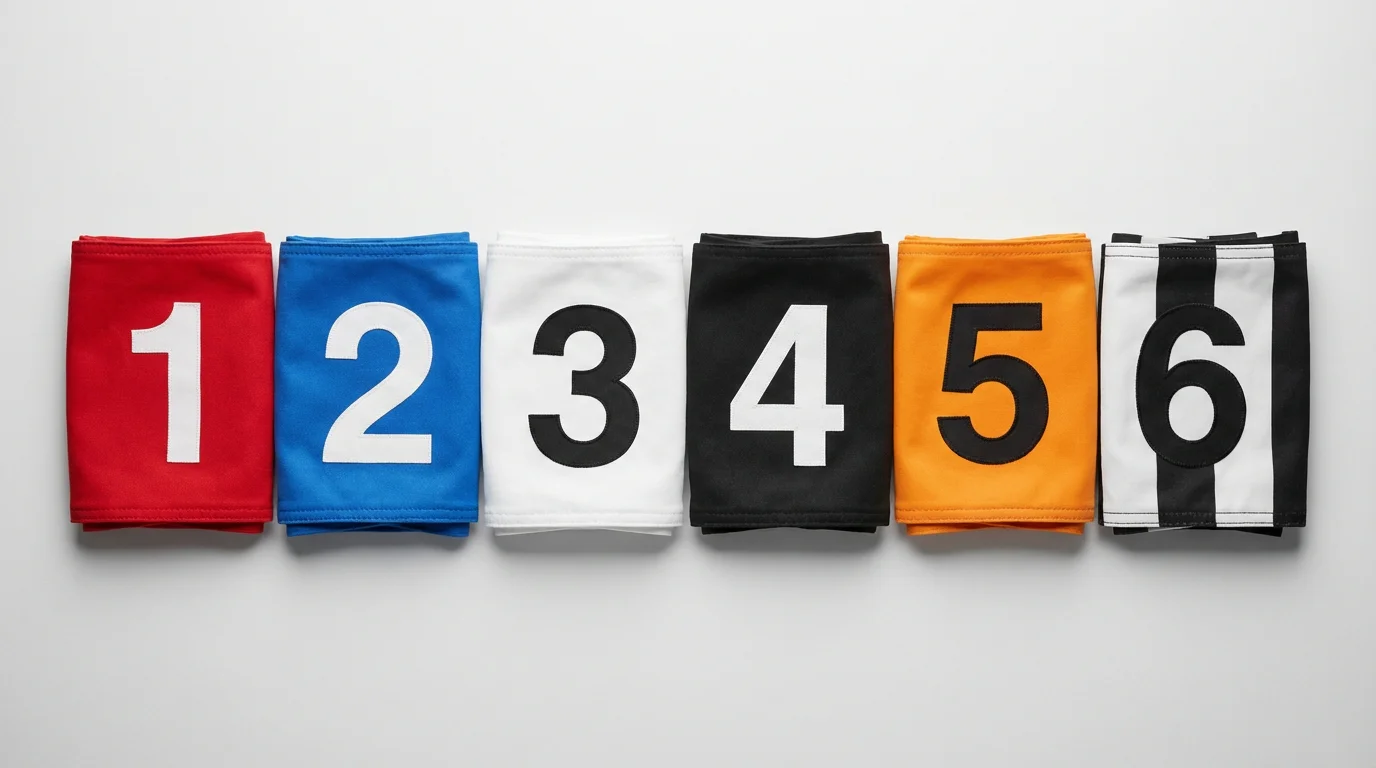
The Six Trap Colours: What Each Runner Wears
Every greyhound in a standard UK race wears a coloured jacket that corresponds to its trap number. The system is universal across all GBGB-licensed tracks, and once you know the colours, you can instantly identify any dog in a race whether you’re watching from the stands, following on a live stream, or checking a photo finish.
Trap 1 is red. The dog drawn on the inside rail, closest to the shortest route around the track, wears a red jacket. At every UK greyhound track, from Romford to Kinsley to Towcester, trap 1 is red without exception.
Trap 2 is blue. The second position from the inside rail, blue is immediately next to the red jacket and often the first dog you’ll see challenging for the rail position into the first bend.
Trap 3 is white. The centre-inside position, white is statistically one of the most successful traps nationally — the middle draw with a slight inside bias. The white jacket is easy to spot mid-race, particularly on evening cards under floodlights where it stands out against the sand.
Trap 4 is black. The centre-outside position, sitting between the middle and wide runners. Black jackets can be harder to pick out in real time, especially on darker evenings, which is why experienced racegoers tend to track dogs by their position on the track rather than relying on jacket colour alone.
Trap 5 is orange. Sometimes described as amber or tangerine depending on the specific shade used, trap 5 is the inside of the wide draws. Dogs from trap 5 often need early pace to avoid being squeezed between the middle runners and the dog from trap 6.
Trap 6 is black and white stripes. The widest draw, the outermost position, and the most distinctive jacket in the field. The striped design makes the trap 6 runner immediately recognisable at any stage of the race. Dogs from trap 6 cover the most ground to the first bend but often find clean air on the outside of the field.
The colour coding hasn’t changed in decades. It’s one of the sport’s most consistent traditions, and it means that a punter who learns the colours once never needs to relearn them — whether they’re watching at Kinsley, Nottingham, Monmore, or any other GBGB venue. The colours are printed on racecards, displayed on results sheets, and used in virtual greyhound racing simulations to maintain the visual language of the sport.
Why Trap Colours Matter for Bettors
The colour system exists for identification, but its practical value for bettors extends beyond simply knowing which dog is which. When you watch a race — live at the track, on a bookmaker stream, or via replay — the jacket colours are your primary visual reference for following the race narrative in real time.
Consider a six-dog race where you’ve backed the trap 3 runner (white). From the moment the traps open, you can follow the white jacket through the field without needing to know the dog’s name, the runner order, or the commentary. You see immediately whether it breaks cleanly, where it positions itself on the first bend, whether it gets crowded, and how it finishes. The colour is a faster identification system than any other, and in a race that lasts less than thirty seconds, speed of recognition matters.
When reviewing replays for form analysis, colours are equally useful. Watching a replay of a previous race to assess how a dog ran — did it lead, get boxed in, run wide, finish strongly? — is far easier when you can instantly locate the relevant runner by jacket colour. Trying to identify a specific dog by its physical appearance alone (coat colour, size, markings) is unreliable at racing speed. The jacket solves that problem completely.
Photo finishes, which are common in greyhound racing given the tight margins, are determined using high-speed cameras positioned on the finish line. The resulting image shows the dogs crossing the line in their jackets, and the colours make the finishing order immediately clear to both the judge and the watching public. Without the jacket system, disputed finishes would be far more frequent and harder to resolve.
There’s also a psychological element. Regular punters develop associations with specific colours through experience. A bettor who has had a good run backing trap 1 runners might feel an instinctive pull towards the red jacket, while another might associate trap 6’s stripes with profitable wide-runner bets. These associations aren’t rational — trap performance depends on the dog, not the colour — but they’re part of the sport’s texture, and the consistent colour system feeds them.
Reserve Runners and What They Wear
Standard races feature six runners, but most meetings also designate reserve runners — substitutes who step in if one of the declared runners is withdrawn before the race. The reserve system has its own jacket convention, and understanding it prevents confusion when a race doesn’t go off with the expected six.
Under GBGB Rule 118, a reserve runner wears the standard trap-colour jacket corresponding to the trap of the withdrawn dog, with an additional letter ‘R’ prominently displayed on each side. So a reserve replacing the trap 2 runner breaks from trap 2, wears a blue jacket, and is identified as a substitute by the ‘R’ marking rather than by a different colour.
The ‘R’ marking is the key visual cue. If you’re following a race where a reserve has been inserted, the jacket colour still matches the trap number — but the ‘R’ on the jacket distinguishes the reserve from the originally declared runner. The racecard and the track’s public address system will announce any reserve replacements before the race, but on a live stream or in a busy betting shop, the announcement is easy to miss. Checking the final declared runners before the race — which most bookmaker sites update automatically — avoids this confusion.
Reserves are drawn from dogs already at the track, typically from a reserve card race or from spare dogs nominated by trainers for the meeting. The reserve dog’s form and grading may differ from the withdrawn runner it replaces, which can significantly affect the competitive balance of the race. If a strongly fancied dog is withdrawn and replaced by a lower-grade reserve, the market will adjust — but not always quickly enough, and not always accurately. Late withdrawals and reserve insertions are situations where attentive punters can sometimes find value that the market hasn’t fully priced.
At Irish tracks, the reserve jacket conventions differ slightly from GBGB standards, with some tracks using their own colour schemes for substitutes. If you bet on Irish greyhound racing as well as UK meetings, check the specific track’s convention rather than assuming the GBGB system applies.
Identifying Dogs at the Track
If you’re attending a meeting at Kinsley or any other GBGB track in person, the jacket colours become your essential navigation tool. From the moment the dogs are paraded in front of the stands to the moment they’re loaded into the traps, the jackets are how you identify and assess the runners.
During the pre-race parade, the dogs are walked past the stands by their handlers. This is your opportunity to assess physical condition — does the dog look lean and fit, or heavy and sluggish? Is it pulling eagerly or being dragged reluctantly? The jacket colour lets you match each physical impression to the corresponding trap number and racecard entry. A dog that looks particularly sharp on the parade, combined with strong form figures on the racecard, reinforces your selection. A dog that looks flat despite good recent form might give you pause.
From the stands during the race itself, the jackets are the only reliable way to follow individual runners. Greyhound racing is fast — the dogs cover the full circuit in under thirty seconds at most tracks — and the field stays tightly bunched for much of the race. Without colour differentiation, picking out your selected runner from a pack of six dogs at full speed would be almost impossible. The colours make it intuitive: you back the white jacket, you watch for white.
At the traps, the dogs are loaded in numerical order from left to right (facing the track), with trap 1 on the inside. The loading sequence gives you a final chance to observe each dog’s demeanour — is it entering the trap calmly or resisting? — before the hare passes and the traps open. Nervous or reluctant loaders sometimes produce slow starts, and the jacket colour lets you track which dog had loading issues and correlate that with its performance.
One practical tip for trackside betting: binoculars help, particularly at larger tracks where the back straight is a long way from the main stand. Even at a compact track like Kinsley, the dogs move fast enough that a naked eye can lose them in the pack. With binoculars, the jacket colours remain distinct through the bends and down the straights, giving you a clearer view of the race dynamics.
How Colours Appear on Results and Racecards
The trap colour system extends beyond the physical jackets. On racecards, results sheets, bookmaker websites, and form databases, the trap colours are used as a visual shorthand to organise and present information. Understanding how they’re displayed on screen makes navigating greyhound data faster and more intuitive.
On most bookmaker websites, the racecard for each race displays the trap number alongside a coloured circle, dot, or band in the corresponding jacket colour. Trap 1’s entry has a red marker, trap 2 blue, trap 3 white (usually with a dark border so it’s visible on a white background), trap 4 black, trap 5 orange, and trap 6 black with white stripes. These colour markers are consistent across platforms — Bet365, William Hill, Coral, and others all use the same scheme — because they mirror the universal GBGB jacket colours.
Results pages follow the same convention. When a race finishes and the result is posted, the finishing order shows each dog with its trap colour marker. A typical result display reads: 1st — trap 3 (white), 2nd — trap 1 (red), 3rd — trap 5 (orange), and so on. The colour marker lets you cross-reference the result with the racecard instantly without needing to match dog names or trap numbers manually.
Form databases like Sporting Life, Timeform, and GreyhoundStats use the colour coding throughout their interfaces. When you pull up a dog’s form record, each past race entry shows the trap number and colour the dog ran from. Over a sequence of runs, you can quickly see whether a dog has been consistently drawn inside (reds and blues), outside (oranges and stripes), or mixed. This visual pattern recognition is faster than reading the trap numbers alone and gives an immediate sense of the dog’s recent draw profile.
On television and streaming coverage, the colours are used in on-screen graphics. Sky Sports Racing overlays trap colours on its race previews, and the SIS feed used by bookmaker streams includes coloured panels in the racecard display. The consistency across all these platforms — physical jackets, printed racecards, digital displays, broadcast graphics — means that once you know the six colours and two reserve colours, you can navigate any greyhound racing context without hesitation.
The system’s simplicity is its strength. Six colours, one per trap, never changed, universally applied. In a sport that involves a lot of fast-moving data — form, times, grades, odds, running comments — having at least one element that’s completely fixed and visual is a genuine aid to clarity.