
Greyhound Trainer Statistics: Why Kennel Form Matters
 Available in US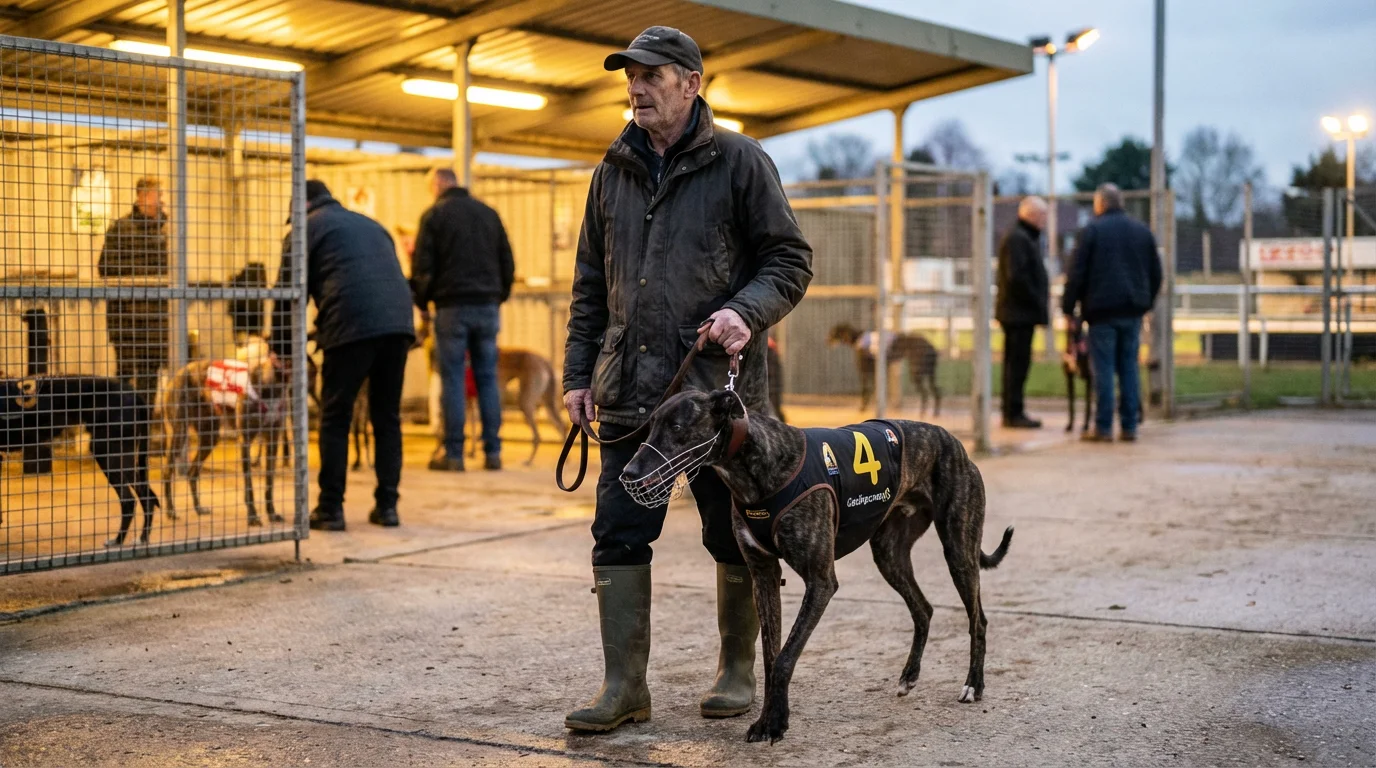
The Trainer’s Role in Greyhound Racing
In greyhound racing, the trainer is the closest equivalent to a football manager — responsible for the daily preparation, physical condition, tactical deployment, and long-term development of every dog in their kennel. Unlike horse racing, where jockeys make in-race decisions that can swing a result, greyhound racing has no jockey. Once the traps open, the dog runs on instinct, fitness, and habit. Everything that happens before the traps open — the feeding, the exercise, the trial work, the recovery from injury, the decision about which race to enter and at which distance — is the trainer’s domain.
A good trainer understands each dog as an individual. One dog might need a specific warm-up routine to break cleanly from the trap. Another might perform best when raced every five days rather than every seven. A third might need firm ground and a sprint distance to show its best. These micro-decisions, accumulated over weeks and months, determine whether a dog runs to its potential or below it. Two dogs of identical physical talent will produce different results if one is managed well and the other isn’t.
The trainer also makes the entries — deciding which races to target, which distances suit each dog, and when a dog needs a rest. A trainer who enters a sprint specialist in a staying race is wasting the dog’s talent. A trainer who pushes a dog through too many races without recovery is courting declining form. The quality of these decisions doesn’t always show up in a single race result, but over a season of racing, the trainers who make consistently good management choices produce better collective results from their kennels.
Research trainer statistics at Kinsley on the kinsleygreyhound homepage.
For bettors, the trainer is a variable that’s easy to overlook but hard to ignore once you start paying attention. A dog’s form figures and running comments describe what happened on the track. The trainer’s record describes the broader pattern of preparation and management behind those results, and that pattern has real predictive value.
How to Check Trainer Statistics
Trainer stats are publicly available across several UK greyhound data platforms, and checking them adds barely a minute to your racecard analysis. The information is there — the question is whether you use it.
GreyhoundStats is the most comprehensive free resource for trainer data in UK greyhound racing. The site records win and place percentages for every trainer at every GBGB-licensed track, broken down by distance, grade, and time period. You can look up a trainer’s overall record at a specific venue, see how they perform with sprint dogs versus stayers, and check whether their win rate has been improving or declining over recent months. The data updates after each meeting, so it’s current.
Timeform’s greyhound service includes trainer analysis as part of its premium offering. Timeform ratings incorporate trainer performance as a factor in their assessments, and their racecard analysis often highlights when a kennel is in strong or weak form. If you subscribe to Timeform, the trainer angle is built into the analysis you’re already reading.
Sporting Life displays the trainer name on every racecard entry, but its trainer-specific analytics are less detailed than GreyhoundStats. You can click through to a trainer’s profile and see their recent runners and results, which gives you a quick sense of current form, but the deeper statistical breakdowns require a dedicated stats platform.
The key metrics to focus on are win percentage, place percentage, and recent trend. A trainer with a 20 percent win rate at a given track is producing roughly one winner in five runners — above the 16.7 percent random baseline for six-runner fields, which indicates competence. A trainer with 25 percent or higher is consistently placing dogs in the right races at the right time. A trainer whose win rate has jumped from 15 percent to 25 percent over the last three months is on a hot streak — their dogs are well, their decisions are sharp, and backing their runners offers a statistical tailwind.
Conversely, a trainer whose win rate has dropped from 22 percent to 10 percent over the same period may be experiencing kennel problems — illness, injury, a batch of dogs past their peak, or simply a run of bad luck. Opposing their runners, or at least treating their dogs with more caution in your analysis, is a reasonable adjustment.
Track-Specific Trainer Data
National trainer statistics tell you something, but track-specific data tells you more. A trainer might have a modest overall record across UK greyhound racing but an outstanding record at one particular venue — and if that venue is the one you’re betting on tonight, the local data matters far more than the aggregate.
Track-specific performance differences arise for practical reasons. Trainers based near a particular stadium send more of their dogs there, know the track’s characteristics intimately, and have relationships with the racing manager that can influence favourable trap draws and race entries. A kennel located twenty minutes from Kinsley will race there frequently, understand how the tight 385-metre circuit affects different running styles, and prepare dogs specifically for Kinsley’s distances and geometry. A trainer based in the south of England who sends a dog to Kinsley for an open race is working with less local knowledge.
The distance dimension adds another layer. Some trainers are particularly strong with sprint dogs, producing fast-breaking, early-pace specialists that dominate over two bends. Others excel with stayers, developing dogs with the stamina and tactical intelligence for six-bend races. If a trainer’s sprint win rate at a given track is 28 percent but their staying win rate is 11 percent, that’s information you should use: back their sprinters with more confidence than their stayers.
Grade-specific patterns are worth checking too. A trainer might excel at the lower grades — A6 through A9 — where the competition is less intense and the margin for error is wider. The same trainer might struggle in A1 through A3, where every dog in the race is fast and well-prepared. This isn’t a criticism of the trainer; it’s a reflection of their kennel’s talent level and their strategic niche. Knowing that a trainer produces consistent winners in A7 but underperforms in A3 helps you calibrate your expectations when their dog is promoted into higher company.
Building your own database of trainer performance at the tracks you bet on most frequently is a worthwhile exercise. Even a simple spreadsheet that records each trainer’s runners and results over a few months gives you a personal reference that supplements the publicly available statistics. Over time, you start recognising patterns — which trainers are reliable, which are inconsistent, which have seasonal peaks — that give you a practical edge over bettors who ignore the trainer column entirely.
Trainer Patterns and Betting
Beyond raw win percentages, trainers exhibit patterns in how they manage their dogs that create actionable betting angles. Recognising these patterns is a matter of observation and record-keeping, and the patterns tend to be consistent because they reflect the trainer’s philosophy and working methods.
One common pattern: trainers who rest and target. Some trainers will give a dog a break from racing — two or three weeks without a run — and then bring it back for a specific race they’ve identified as winnable. The dog returns from the break fresh and race-fit, often with a trial performance that the trainer has assessed privately but the public may not have seen. These returning runners often produce above-average results because the trainer has timed the comeback deliberately. If you notice a trainer whose dogs frequently win first time back from a layoff, that’s a pattern worth tracking and backing.
Another pattern: trainers who test at higher grades. Some trainers regularly enter dogs in races one grade above their current level to see if they’re ready for promotion. The dog might finish fourth or fifth in the higher grade — an unremarkable result — but the trainer has gained information about the dog’s competitiveness at that level. If the dog is then entered back in its original grade, the recent form looks ordinary (a fourth and a fifth), but the trainer knows the dog handled faster company reasonably well. The next race in the lower grade often produces a confident, decisive win. Identifying these “test runs” requires checking whether the dog’s recent poor results were at a higher grade than tonight’s race.
Debut runners from established trainers are another angle. When a well-known trainer introduces a new dog to the track, the trial times and the trainer’s reputation provide clues. A top trainer with a consistent record of debuting dogs that win within their first three runs is giving you a form proxy: even without race form, the trainer’s track record with newcomers suggests the dog has been assessed as capable. Conversely, a trainer whose debutants rarely win early might produce dogs that need several races to settle, making them poor value on debut but worth watching for later improvement.
Seasonal patterns matter too. Some trainers perform better in summer — perhaps their training facilities are well-suited to dry conditions, or their dogs are bred for speed on firm going. Others peak in winter, when stamina matters more and their preparation style suits heavier ground. Checking a trainer’s monthly win rates across a full calendar year reveals whether their kennel has seasonal cycles, and timing your betting to coincide with a trainer’s strong period is a simple adjustment that can improve your overall strike rate.
Notable Trainers at Northern Tracks
Northern England’s greyhound circuit — Kinsley, Doncaster, Newcastle, Sunderland, Belle Vue — has its own ecosystem of trainers, many of whom have been producing competitive dogs at these venues for years. While naming individual trainers risks outdating quickly as careers evolve and kennels change, understanding the structure of the northern training scene gives context to the names you’ll see on racecards.
The northern tracks tend to have a tighter pool of regular trainers than the metropolitan venues in London and the south-east. A typical northern meeting might feature dogs from fifteen to twenty different kennels, with three or four trainers responsible for a significant proportion of the runners. These dominant local trainers know their home tracks intimately — the surface behaviour in wet and dry conditions, the trap biases at each distance, the grading standards and how the racing manager operates. This local knowledge compounds over time and is reflected in their win percentages.
At Kinsley specifically, the racing programme draws dogs primarily from trainers based in Yorkshire and the wider north of England. The track’s distances — 268, 462, 650, and 844 metres — require versatility from the trainers’ kennels, and the trainers who maintain competitive dogs across multiple distances tend to outperform those who specialise narrowly. A trainer with strong sprint dogs but no staying-race capability is missing a quarter of the card; a trainer with strength across all distances has four times as many opportunities to win.
Combine trainer form with our racing form guide sites in racing form guide websites.
When assessing a northern meeting, check the top three or four trainers by number of runners on the card. These are the kennels shaping the competitive landscape that evening. If one trainer has dogs in six of the twelve races, their overall kennel form — whether they’re on a winning streak or a cold spell — will disproportionately influence the meeting’s results. A hot kennel at a northern track, where the same trainer can dominate the card, creates a different betting dynamic than a southern meeting where runners come from dozens of different trainers.
The best approach is to track trainer performance at your regular tracks over several months. Note which trainers consistently win, which appear frequently but underperform, and which have dogs that run well without winning — the last category often produces good each-way value. Once you’ve built a picture of the local training ranks, the trainer column on the racecard becomes one of the most useful data points available to you, adding context that form figures, trap draws, and sectional times can’t provide on their own.
