
Greyhound Racing Jackpot and Pick Bets Explained
 Available in US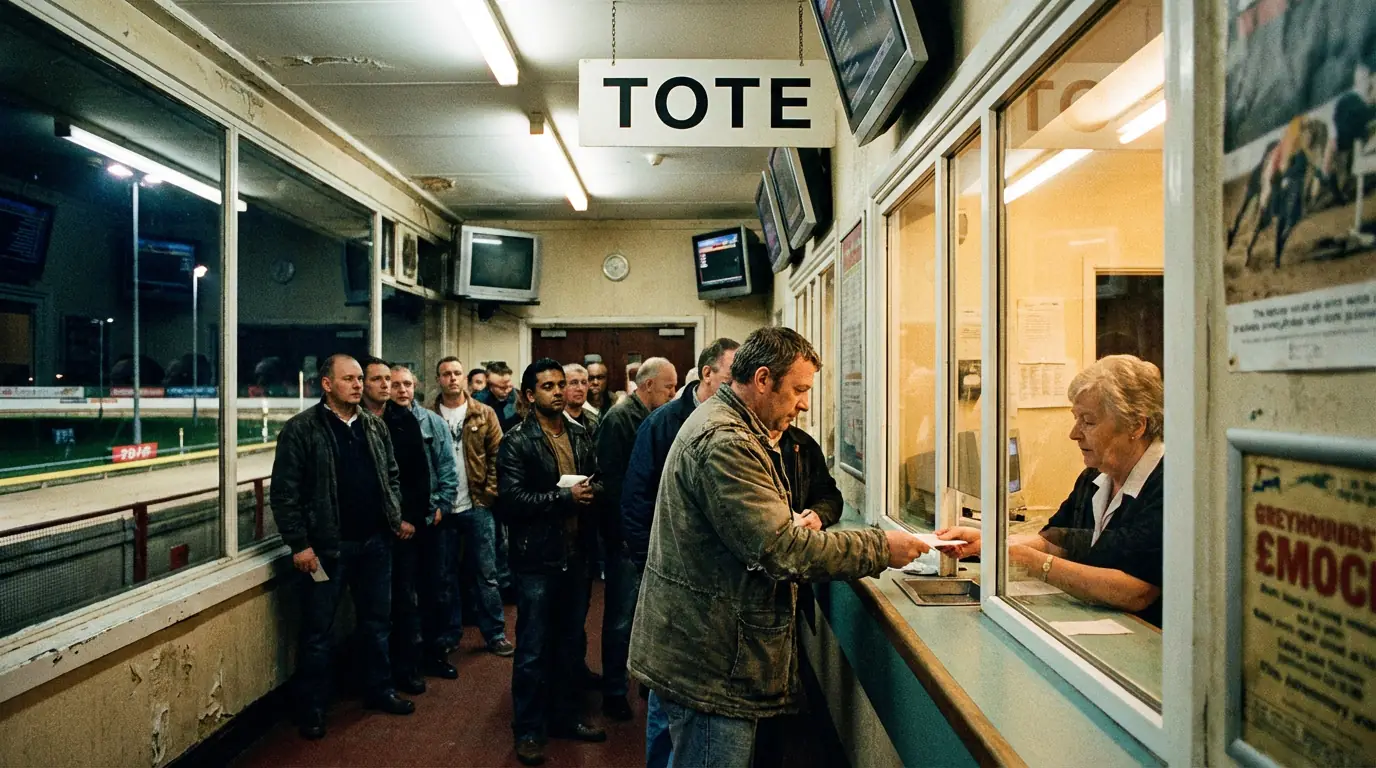
Jackpot Bet Mechanics
A jackpot bet in greyhound racing requires you to select the winner of every race in a designated sequence — typically the last six races on a card, though some operators use different configurations. It’s a pool bet, meaning all stakes go into a shared pool and the payout is divided among winning ticket holders, rather than settling at fixed odds with the bookmaker. If nobody picks all six winners correctly, the pool usually rolls over to the next meeting, creating progressively larger jackpots that attract more interest and bigger pools.
The pool structure changes the economics fundamentally. In fixed-odds betting, your return is determined by the price you take at the time of your bet. In a pool bet, the return depends on how many other punters share the winning combination. A popular combination — six favourites winning — might pay relatively little even with a large pool, because many people will have backed the same selections. An unexpected sequence of results — outsiders winning several of the six races — produces fewer winning tickets and a larger payout per winner.
Tote pools at greyhound tracks operate the jackpot at the venue itself, and some online bookmakers offer their own jackpot products tied to specific meetings. The Tote’s version is the traditional format: you select your winners on a slip or digital interface, the stakes enter the pool, and the dividend is declared after the last race in the sequence. Online jackpot products may differ in structure — some guarantee minimum pools, others add bonus funds for rollovers — so reading the specific rules of the product you’re betting into is essential.
The minimum stake for a jackpot bet is usually small — one pound per line in most formats. A “line” is one combination: one selection per race across all six races. The cost escalates when you add multiple selections per race to cover more possible outcomes, which is where the permutation maths becomes important.
Find all exotic bet guides on the kinsleygreyhound homepage.
Pick 6 Structure
The Pick 6 is the most common jackpot format in greyhound racing and the one you’ll encounter at most UK meetings that offer pool betting. The concept is identical to the jackpot — pick the winner of six consecutive races — but the Pick 6 label is used by specific operators and pools to distinguish their product from other multi-race formats.
In a six-race sequence with six runners per race, there are 46,656 possible outcomes (six to the power of six). One line covers one of those outcomes. The probability of getting all six correct with a single random selection is roughly 0.002 percent — slightly better than one in fifty thousand. The odds improve when you apply form analysis, because not all runners in each race have equal chances, but the underlying probability remains daunting. Even if you can reliably narrow each race to a two-dog contest, the probability of getting six two-dog races correct is one in sixty-four — still under two percent.
These numbers explain why the jackpot rolls over so frequently. The difficulty of picking six consecutive winners from six-runner fields is sufficient to ensure that the pool goes uncollected on most nights. A rolled-over pool becomes more attractive — the carryover adds to the new night’s stakes, creating a larger potential payout — which in turn draws more bets into the pool. Large carryover nights are the jackpot bettor’s prime opportunities, because the payout-to-stake ratio is at its most favourable when the pool has been building across several meetings.
Some operators offer consolation dividends for getting five out of six correct, which softens the all-or-nothing nature of the bet. The consolation payout is typically a fraction of the main pool and is shared among all tickets with five winners. This doesn’t change the core economics — the jackpot is still extremely hard to win — but it does provide occasional returns that keep the format viable for regular players.
A structural point worth noting: because the jackpot is a pool bet, the concept of “odds” works differently. There’s no fixed price on your selection. The return depends entirely on the size of the pool and the number of winning tickets. This means the traditional value calculation (comparing your assessed probability to the bookmaker’s implied probability) doesn’t apply directly. Instead, value in jackpot betting comes from selecting combinations that other bettors are less likely to have backed — the contrarian angle that maximises your share of the pool if you win.
Strategy for Multi-Race Bets
Strategy in jackpot and Pick 6 betting is less about finding winners — you need to do that in any bet — and more about managing the unique dynamics of the pool format. The two key strategic dimensions are coverage (how many outcomes you cover) and differentiation (how different your selections are from the crowd).
Coverage is straightforward: the more lines you buy, the more outcomes you cover, and the higher your probability of hitting the winning combination. But coverage costs money. If you select two dogs in each of the six races, you’ve covered 64 combinations at one pound per line — a 64-pound investment. Three dogs in each race covers 729 combinations. The cost escalates geometrically, and most recreational bettors can’t justify the outlay needed for comprehensive coverage.
The efficient approach is selective coverage: using multiple selections in races you find genuinely competitive (where you can’t separate two or three contenders) and single selections in races where one dog stands out clearly. A strategy of two selections in three difficult races and one selection in three strong-opinion races produces eight combinations — eight pounds for eight lines. That’s affordable, and it balances coverage in the uncertain races with conviction in the stronger ones.
Differentiation is the contrarian dimension. In a pool bet, your payout depends on how many other winning tickets share the pool. If you back the favourite in every race and they all win, you’ll share the pool with every other punter who did the same thing — and there will be many. The per-ticket return could be modest. If you include one or two outsiders in your combination and they win, fewer tickets will match, and your share of the pool is larger.
The tension is real: including outsiders increases the potential payout but decreases the probability of winning. The optimal strategy is to include outsiders only in races where you have genuine analytical reasons to think they can compete, not just for the sake of being different. A dog at 8/1 that you’ve identified as a strong each-way contender based on form, trap draw, and conditions is a legitimate inclusion. A 12/1 shot with no obvious winning chance, included purely for differentiation, just wastes a line.
Perms and Coverage Options
Permutation betting — “perms” — is the mechanical framework for building multi-selection jackpot tickets, and understanding how perms work prevents two common mistakes: underestimating the cost and overestimating the coverage.
A full perm covers every possible combination of your selections across all races. If you select two dogs in race one, one in race two, three in race three, one in race four, two in race five, and one in race six, the full perm is 2 × 1 × 3 × 1 × 2 × 1 = 12 lines, costing twelve pounds at a pound per line. Every combination of your selected dogs is covered. If any combination of your selections produces the correct result, you win.
The cost calculation is multiplicative, not additive — and this is where punters routinely underestimate their outlay. Adding one extra selection in one race doesn’t add one pound to the cost; it multiplies the total by the new number of selections in that race. If you have a 12-line perm and add a third dog in race five (from two to three), the new cost is 2 × 1 × 3 × 1 × 3 × 1 = 18 lines. Six lines added from one extra selection. If you add a third dog in race one as well, it becomes 3 × 1 × 3 × 1 × 3 × 1 = 27 lines. The escalation from twelve pounds to twenty-seven from just two additional selections illustrates why cost discipline is essential.
Some operators offer banker perms, where you designate certain races as “bankers” — single selections that you’re confident about — and perm only the remaining races. This locks in your strong opinions and concentrates your investment on the races you find more open. A banker perm with three bankers and three permed races (two selections each) costs 1 × 1 × 1 × 2 × 2 × 2 = 8 lines — manageable and focused.
Part-perms, which cover only a subset of the possible combinations, are available in some pool formats. Instead of covering all 64 combinations from two selections in six races, a part-perm might cover 30 of the 64, reducing the cost but also reducing the coverage. Part-perms are a compromise between full coverage and budget constraints, and they work best when you have a specific logic for which combinations to include — for example, covering all combinations that include at least one of your strongest selections in every pair of races.
The golden rule of perm betting: always calculate the total cost before confirming the bet. Multiply the number of selections in each race together, then multiply by the unit stake. If the total exceeds your budget, remove selections from the races where you’re least certain. Never let the mechanics of permutation lead you into a stake you didn’t intend.
Managing Expectations
Jackpot and Pick 6 bets are, by design, difficult to win. This isn’t a flaw in the format — it’s the feature that creates the large payouts. If jackpots were easy to hit, the pools would be small and the returns unremarkable. The difficulty is what makes the occasional win significant, and accepting this is the starting point for a healthy relationship with the bet type.
The realistic expectation is that you will lose most jackpot bets. Even a skilled form reader with strong analytical methods will get six races wrong more often than right. The consolation dividends for five out of six correct provide occasional returns, but they rarely cover the accumulated stakes from previous unsuccessful attempts. Over a season of regular jackpot betting, the net position for most punters is negative. This is mathematically inevitable given the difficulty of the bet and the pool operator’s deduction (typically around 20 to 30 percent of the pool is retained as the operator’s margin before the dividend is calculated).
Compare with forecast betting in forecast betting.
The responsible approach is to treat jackpot betting as a form of entertainment with a known cost. Set a budget for jackpot bets that’s separate from your main betting bankroll. If you allocate ten pounds per week to jackpot lines, you spend roughly five hundred pounds a year — and one jackpot hit on a decent rollover night can return that amount many times over. The expected value is negative, but the experience of following six races with a running interest, the excitement of getting to five out of six and needing one more, and the occasional substantial windfall are the returns that the stake buys.
Two traps to avoid. First: chasing the jackpot by increasing your stake after near-misses. Getting five out of six feels tantalizingly close, and the temptation is to spend more on the next attempt. Resist this. The probability of getting six out of six doesn’t improve just because you got five last time. Second: treating the jackpot as a serious investment vehicle. It isn’t. The pool deduction alone guarantees negative expected value for the average ticket, and no amount of form analysis can overcome the structural mathematics of picking six consecutive winners from six-runner fields. The jackpot is a fun bet with a long-shot payout. Enjoy it on those terms.
